



Choosing a granite pot for heating milk is a popular option in every home due to its healthy properties and durability, which make it a preferred type of cookware for many people. These pots feature good heat distribution that prevents milk from sticking and helps cook it evenly without burning.
The Importance of Using a Granite Pot for Heating Milk
Granite cookware has several advantages, especially when heating milk, and is also suitable for cooking many other foods. Its most important features include:
Non-stick: This reduces the likelihood of milk burning and sticking.
- Healthy and safe: They are usually made with non-reactive layers, making them a healthy choice.
- Even heat distribution: They help heat milk evenly without creating hot spots.
Different Types of Granite Cookware
Granite cookware is available in different types and sizes, including:
Deep heating pots: Suitable for heating large quantities of milk.
- Shallow pans: Useful for heating small quantities.
- Pots with handles: Make it easier to pour milk and prevent spills.
The Correct Way to Clean Granite Cookware
To preserve granite cookware, whether it is a granite milk pot, pan, or other container, you should follow a specific method to prevent damaging the granite. The most important methods include:
Use a soft sponge to avoid scratching the surface.
- Avoid harsh detergents; mild soap is preferable.
- Let the cookware cool before washing it to prevent the surface from cracking.
How to Choose the Best Granite Cookware for Heating Milk
When buying granite cookware, pay attention to the following points to get pure granite cookware suitable for your needs:
Quality and layers: Check the quality of the granite layers and their scratch resistance.
- Heat resistance: Make sure the cookware can withstand high heat without cracking or being damaged.
- Appropriate weight: Choose cookware with a medium weight—neither too light nor too heavy—to ensure ease of use.
Granite Milk Pot from Authentic Home
Authentic Home offers many types of cookware suitable for all your kitchen and home needs. There are various elegant styles of granite milk pots available at Authentic Home to choose from. Here are some of the most prominent:
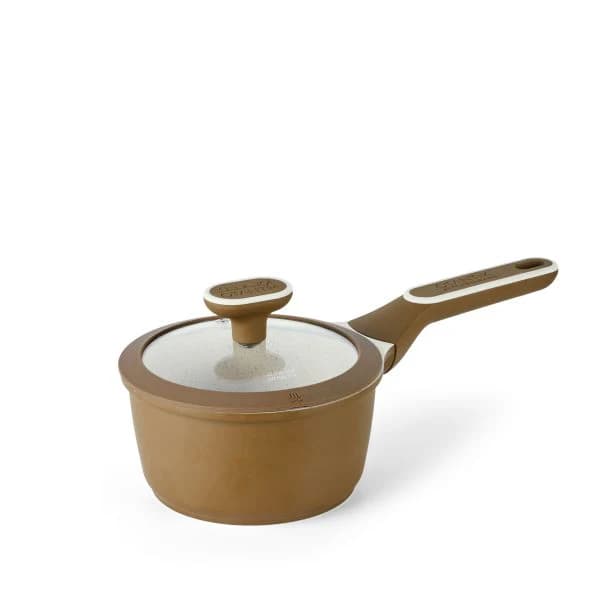
This granite milk pot from Authentic Home features a beige non-stick granite inner layer and an elegant, distinctive brown cast aluminum outer layer that distributes heat evenly. It also has a soft-touch heat-resistant silicone handle and an ABS base, making it suitable for use on various stovetops while preserving milk and heating it healthily.
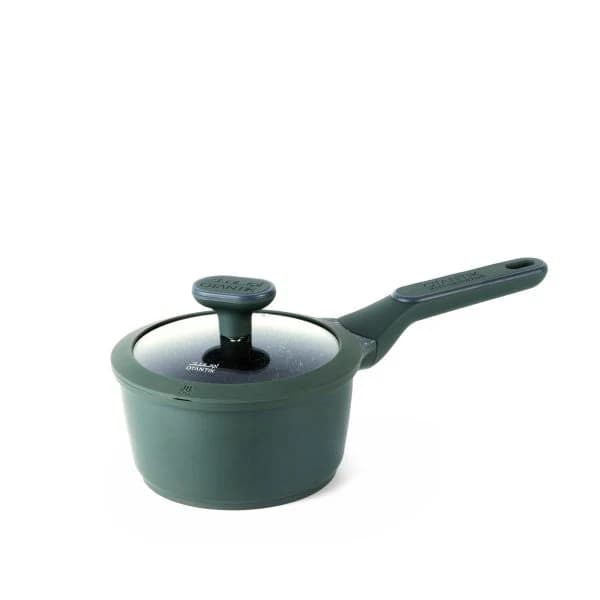
This granite milk pot from Authentic Home features a black non-stick granite inner layer and a green cast aluminum outer layer that distributes heat evenly. The soft-touch heat-resistant silicone handle is ABS color, and the base is suitable for use on various stovetops.
Conclusion
A granite milk pot is an excellent choice for heating milk due to its ability to distribute heat evenly and prevent food from sticking. These pots offer durability and safety thanks to their non-reactive layers. Drinking milk is also important for health; however, it is recommended to heat it properly over low heat to preserve its nutritional value.
Frequently Asked Questions
1. Why is granite cookware considered the best choice for heating milk?
Granite cookware is non-stick and provides even heat distribution, reducing the risk of milk burning or sticking and making it safer and easier to heat.
2. What types of granite cookware are suitable for heating milk?
There are many types, such as deep pots for heating large quantities, shallow pans for small quantities, and others with handles for easily pouring milk without spills.
3. How do I heat milk properly?
It is recommended to heat milk over low heat while stirring continuously to prevent it from sticking or burning. You should also avoid a vigorous boil to preserve its nutrients.
4. How can I clean granite cookware without damaging it?
It is best to use a soft sponge and mild soap, and to avoid sharp tools or harsh detergents. You should also let the cookware cool before washing it.


